
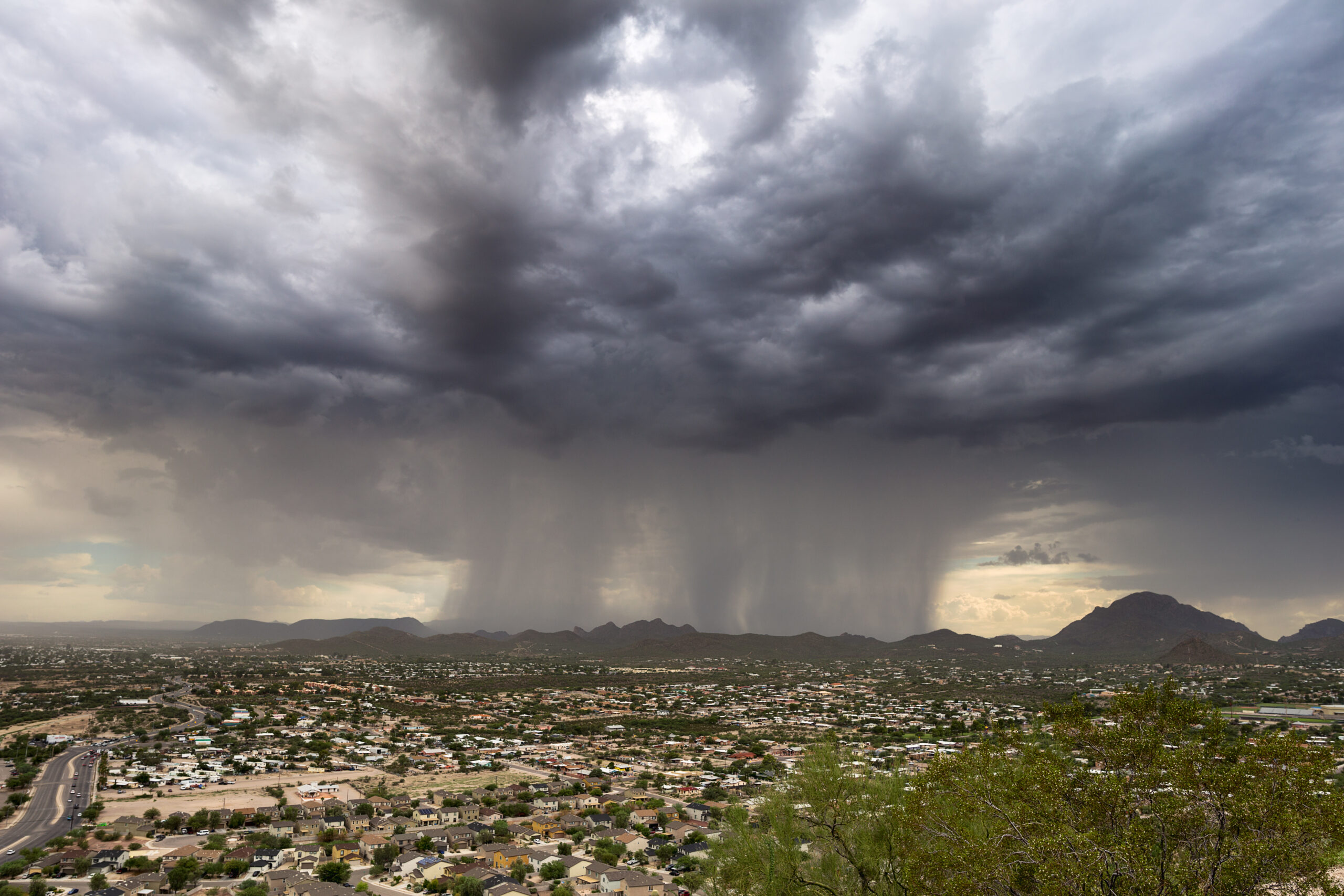

Arizona boards and managers are used to worrying about heat, not water. But some years flip the script, and 2026 may be one of them. Federal forecasters at NOAA’s Climate Prediction Center currently project that an El Niño pattern is very likely to develop and persist into the end of the year, with some models suggesting it could become strong or even very strong. At the same time, NOAA’s seasonal outlook is already pointing toward above-normal precipitation across parts of the Southwest, and meteorologists note that El Niño patterns often enhance moisture flow and storm activity in this region. Historically, El Niño events have been associated with a greater likelihood of wetter conditions in the southern tier of the United States, including Arizona, particularly during the late monsoon and winter months.
Whether this ultimately turns into a “super” El Niño is still uncertain, and Arizona’s monsoon response can vary from year to year. But from a legal perspective, that uncertainty is not the key issue. What matters is that the risk of heavier rainfall is being widely forecast and discussed. That changes how decisions made by community associations today may be judged after a loss occurs. Put simply, when elevated storm risk is on the radar, boards and managers are expected to take it into account.
For condominium associations in particular, the greatest exposure tends to come from the building envelope. Roofs, flashing, sealants, and exterior walls are all vulnerable to wind-driven rain, which can be a source of storm-related damage in Arizona. Many of these components degrade gradually under intense sun and heat, and issues can sit dormant until a major rain event exposes them. When that happens, disputes often focus on whether the condition was longstanding and should have been identified and repaired earlier. In a wetter year, minor defects are more likely to turn into widespread intrusion claims, and it becomes harder to argue that the damage was isolated or unforeseeable.
Drainage is another area that deserves close attention, particularly in older communities. Many Arizona associations were built in compliance with the standards in place at the time, but their infrastructure may not match current design assumptions. That alone does not generally create liability. Associations are not automatically required to upgrade systems simply because codes evolve. The risk arises when those systems are not maintained or when their limitations are known but not addressed. If culverts are clogged, storm drains are obstructed, or retention areas have lost capacity, even a properly designed system can fail. In a year with higher rainfall potential, those weaknesses are more likely to result in actual flooding and claims that the association failed to maintain its property.
Natural drainage patterns add another layer of complexity. Many communities rely on washes, swales, and grading to move water through and away from the property. Problems develop when those pathways are altered or neglected. Landscaping changes, wall construction, and deferred maintenance can all interfere with how water is supposed to flow. When water is redirected, concentrated, or allowed to back up in a way that damages homes or neighboring property, associations can face claims of negligence or nuisance. In those cases, the analysis typically focuses less on how severe the storm was and more on whether the association’s actions contributed to the damage.
Insurance issues often follow close behind. In years with significant rainfall, associations have faced disputes over whether damage resulted from covered rain intrusion or excluded causes such as flooding or deferred maintenance and long-term deterioration. These disputes frequently turn on the association’s maintenance history. Without documentation of regular inspections and timely repairs, insurers may argue that the damage resulted from pre-existing conditions rather than a sudden event.
The good news is that the steps needed to reduce risk are not complicated. The most important thing an association can do is act before the storms arrive and document that effort. A thorough pre-monsoon inspection of roofs, exterior components, and drainage systems performed by qualified professionals can identify problems while they are still manageable. Addressing known issues, even if incrementally, demonstrates that the board is taking its maintenance responsibilities seriously.
Drainage maintenance is particularly important. Clearing debris, removing sediment, and confirming that inlets and outlets are functioning properly can significantly affect how a system performs during a storm. Where there are known limitations, consulting with an engineer to understand system capacity and identify practical improvements can help the board make informed decisions. Even modest mitigation steps can reduce both damage and liability exposure.
Boards should also be mindful of how their decisions are documented. When maintenance issues or potential improvements are discussed, the record should reflect the information considered and the reasoning behind the board’s actions. If cost or other factors lead the board to defer certain work, that decision should be supported by a clear and rational explanation, ideally informed by professional input.
Finally, communication with owners remains an important part of the equation. Letting owners know that heavier storms are possible, reminding them of their own maintenance responsibilities, and encouraging prompt reporting of leaks or drainage problems can help limit damage and clarify responsibilities. It also reinforces that the association is acting reasonably in light of known conditions.
A potential El Niño year does not change the underlying duties of Arizona community associations. It does, however, raise expectations. When credible forecasts point to increased storm activity, the question becomes whether the association responded appropriately. Boards and managers who take the time now to inspect, maintain, document, and communicate will be far better positioned not only to weather the storms ahead, but also to defend their decisions if those storms lead to claims. The attorneys at CHDB Law are here to help your community association weather any upcoming storms. Call us toll free at (800) 743-9324 or email moc.walbdhc@ofni.
The information contained in this article is not intended to be legal advice and is provided for educational purposes only.